
-
South Carolina Wildflower Seed Mix
Shop nowRegular price $7.99 USDRegular price -
Best Seller


Poppy Power - Poppy Flower Seed Mix
Shop nowRegular price $20.49 USDRegular price -
Giftworthy


Texas Wildflower Seed Mix
Shop nowRegular price $10.49 USDRegular price -
Giftworthy


North Carolina Wildflower Seed Mix
Shop nowRegular price $9.49 USDRegular price -
Midwest All Perennial Wildflower Seed Mix
Shop nowRegular price $35.49 USDRegular price -
Northeast All Perennial Wildflower Seed Mix
Shop nowRegular price $35.49 USDRegular price -
Giftworthy


California Wildflower Seed Mix
Shop nowRegular price $17.99 USDRegular price -
Western Wildflower Seed Mix
Shop nowRegular price $18.49 USDRegular price -
Southwest Wildflower Seed Mix
Shop nowRegular price $18.49 USDRegular price -
Staff Pick

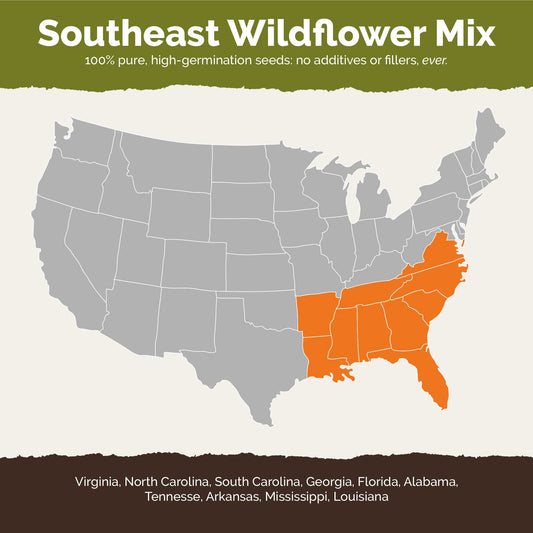
Southeast Wildflower Seed Mix
Shop nowRegular price $17.99 USDRegular price -
Staff Pick


Pacific Northwest Wildflower Seed Mix
Shop nowRegular price $17.99 USDRegular price -
Staff Pick

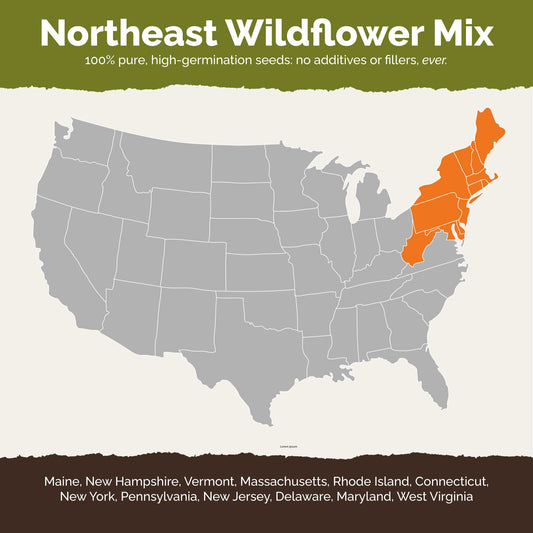
Northeast Wildflower Seed Mix
Shop nowRegular price $17.99 USDRegular price -
Giftworthy

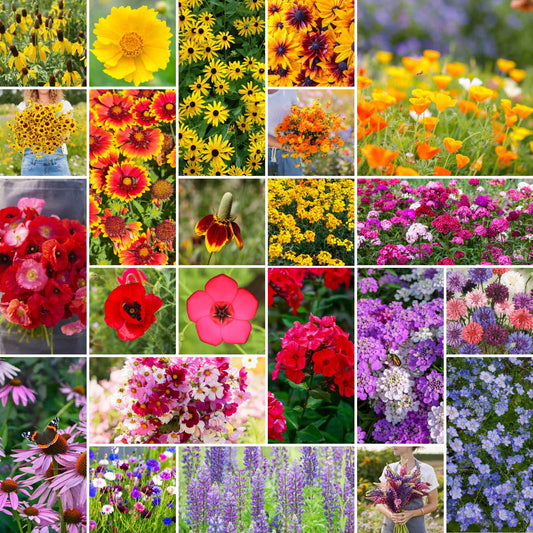
Midwest Wildflower Seed Mix
Shop nowRegular price $17.99 USDRegular price -
Best SellerStaff Pick


California Dreaming - California Poppy Flower Seed Mix
Shop nowRegular price $20.49 USDRegular price


How to Plant Wildflowers – Regional Mixes
Fast Facts
- Planting season
- Fall, Spring
- Life cycle
- Annual, Annual/Perennial Mix, Perennial
- Sowing method
- Direct Sow
- Seed prep
- Requires Light, Stratification
- Light
- Full Sun, Partial Shade
- Water needs
- Average
- Planting depth
- 1/2 inch
- Spacing
- 2-4 grams per 10 sq ft
- Mature height
- 25+ inches
- Hardiness zones
- 3 to 10
- Bloom season
- Varies by variety
Ranges cover every variety in this group. Check the product page for the exact figures.
About Wildflowers – Regional Mixes
Wildflowers – Regional Mixes grow in full sun, partial shade positions. Expect 25+ inches at maturity. The figures below are the ones on the packets in this group; each product page carries the exact numbers for that variety.
When to plant
Plant in fall, spring. Sow directly where the plants are to grow; this variety does not transplant happily. The seed needs a cold, moist period before it will break dormancy: sow in late fall and let winter do the work, or chill it in damp medium in the refrigerator first. Hardy in zones 3 to 10 — your local frost dates decide the exact week.
Where to plant
Choose a site in full sun, partial shade. Water needs are average once the plants are established. Free-draining soil matters more than rich soil; seed sown into ground that stays wet rots before it germinates. Allow 2-4 grams per 10 sq ft between plants so air can move between them. Plan for 25+ inches of growth when you place them in a bed or border.
How to plant
Sow 1/2 inch deep, spaced 2-4 grams per 10 sq ft apart. This seed needs light to germinate, so press it onto the surface and firm it in rather than burying it. Water gently to settle the soil, then keep the surface evenly moist until seedlings or shoots appear.
How to care
Keep watering average, at the base of the plant rather than over the leaves. In zones 3 to 10 these come back each year: let the foliage die down naturally after flowering, since that is what feeds next season's growth.


